Case /
Derivco
Powering Social Interaction in Betway's Sportbook
Client
Betway / Derivco
Role
Senior UI/UX Designer
Tags
Product Design, UI, UX, Design System
Duration
2022 - 2025
Overview
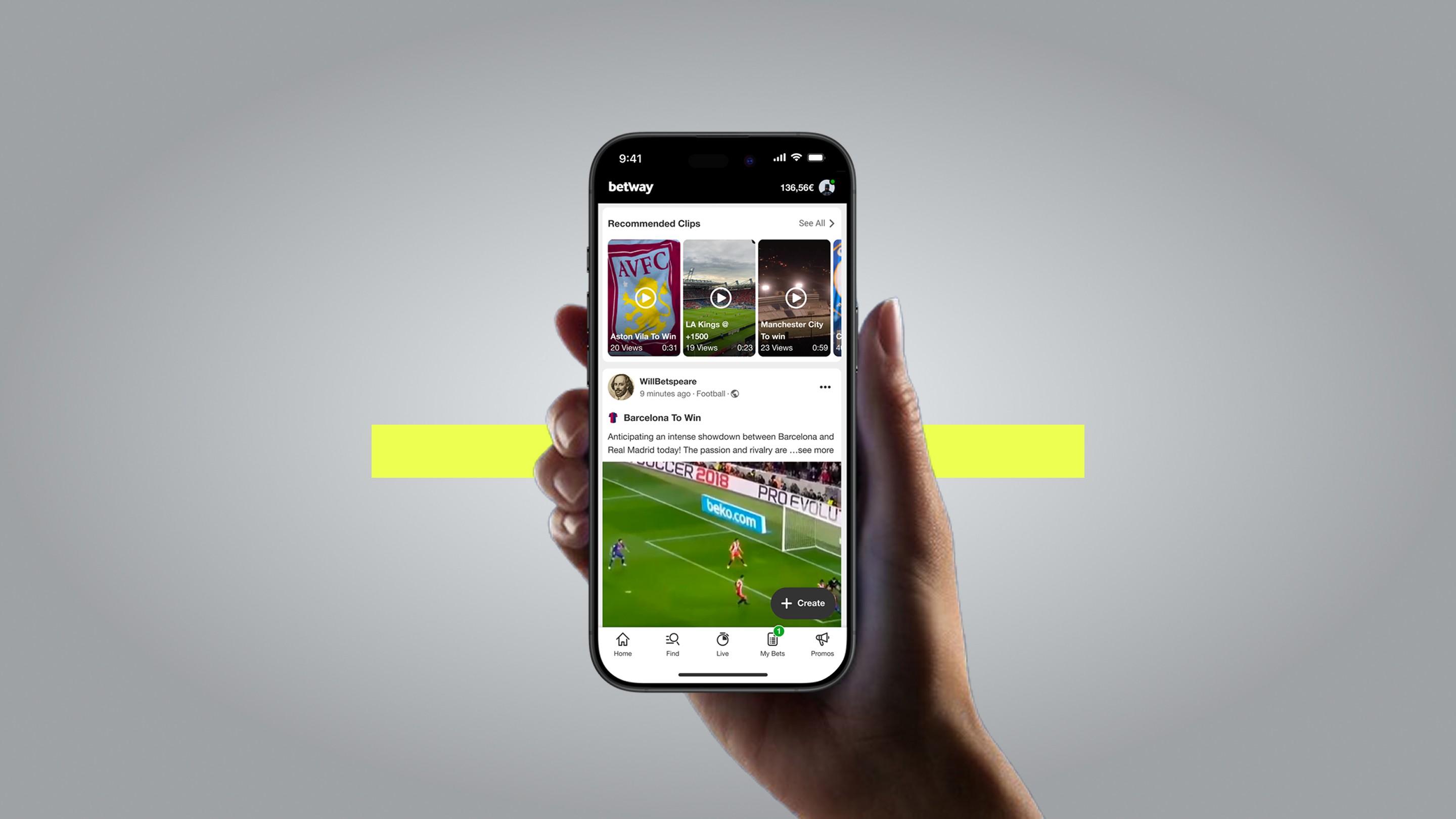
Expand user engagement beyond betting by launching a fully integrated social suite inside Betway's sportsbook app. The challenge was to design an experience that felt native, engaging, and usable without overwhelming sports-focused users.
Outcomes
Enabled scalable product development
Designed a white-label design system allowing multiple partners to customise branding while maintaining a shared product framework.
Multi-brand platform
Unified design system used across main sportsbook and 7 casino products by 10+ designers and 50+ developers.
Faster design-to-development cycles
Used AI-assisted and code-based prototyping to validate ideas earlier and reduce ambiguity during implementation.
Goals & UX Drivers
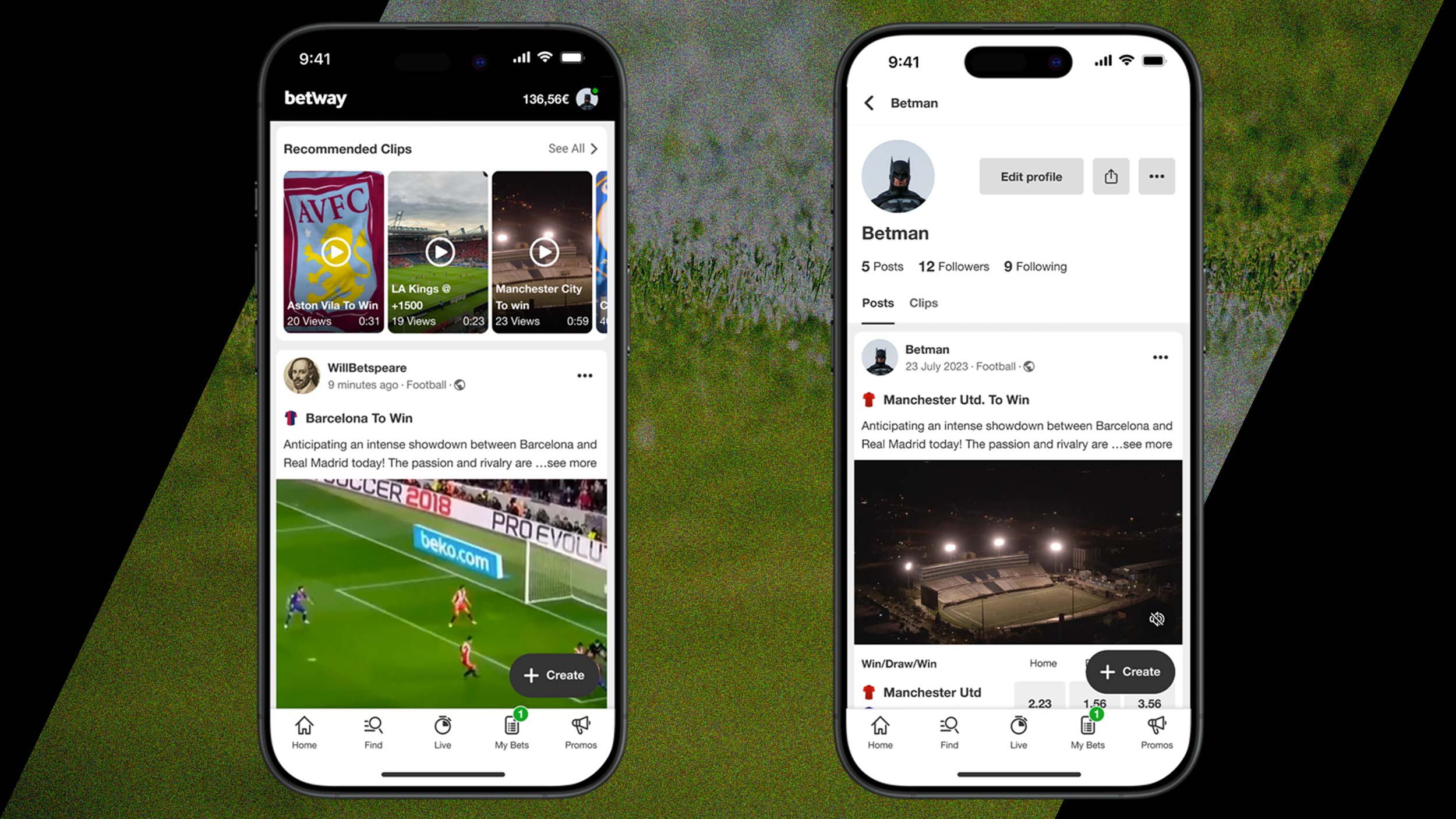
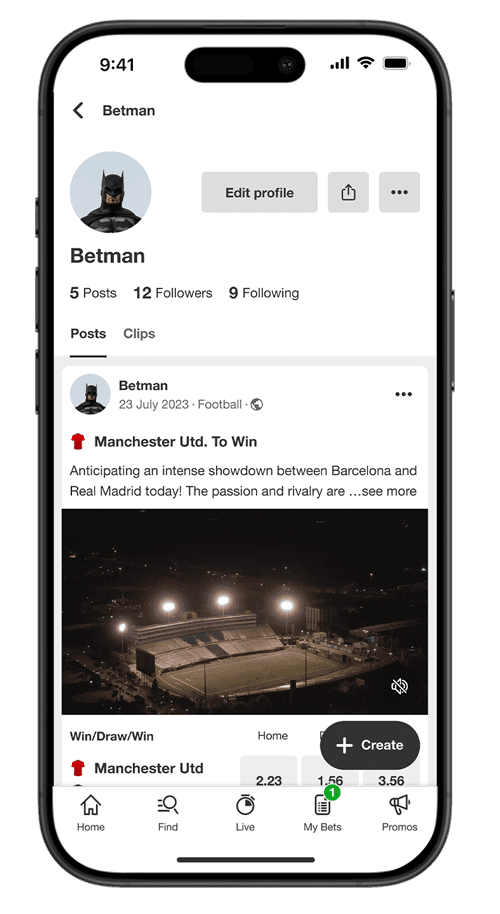
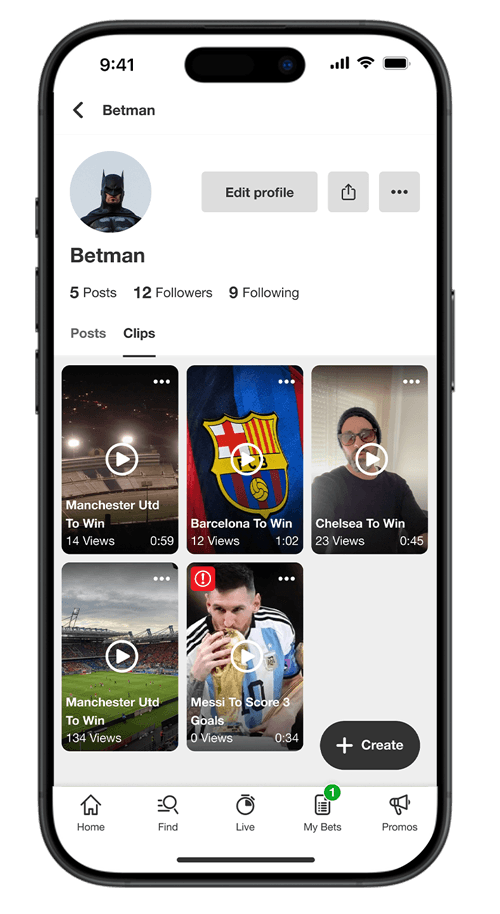
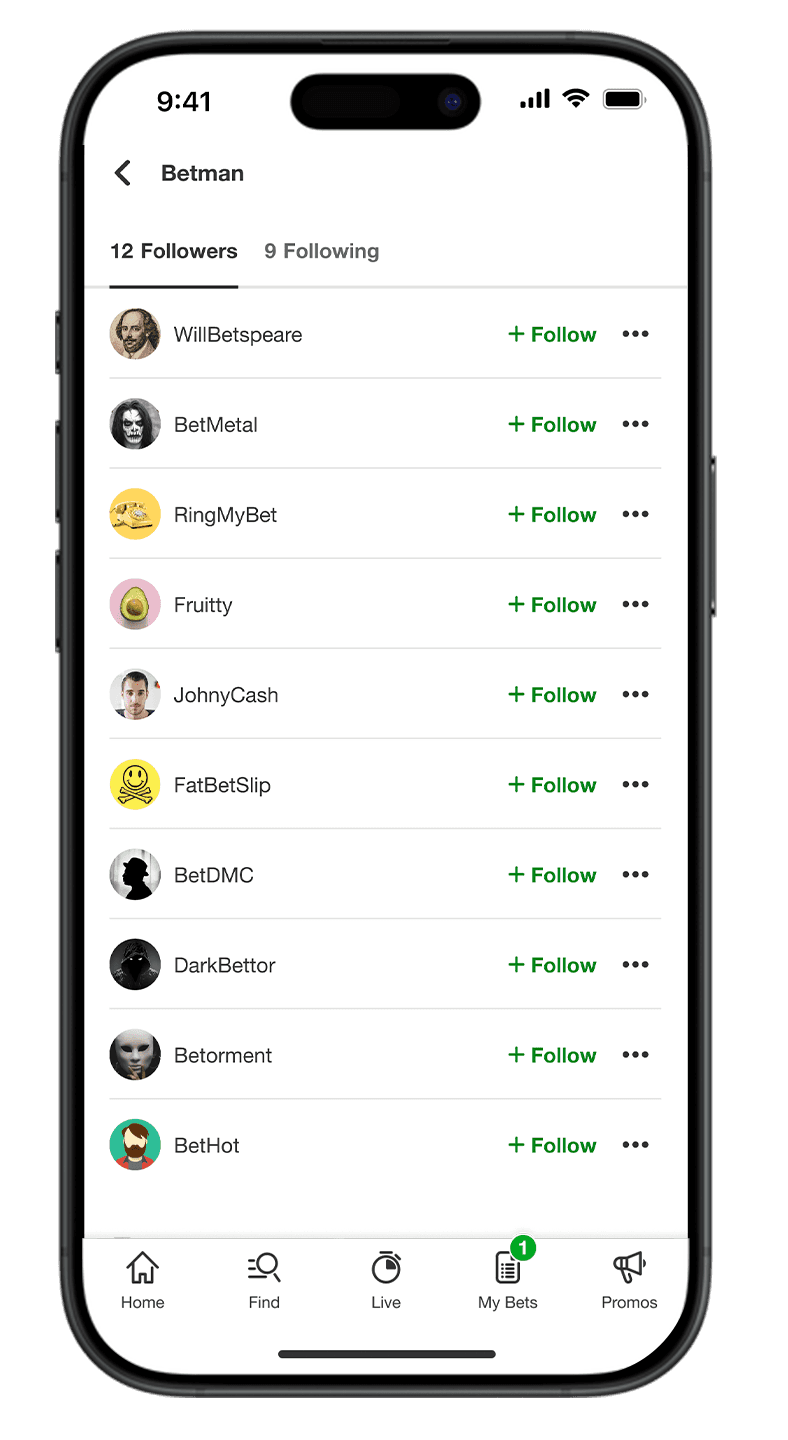
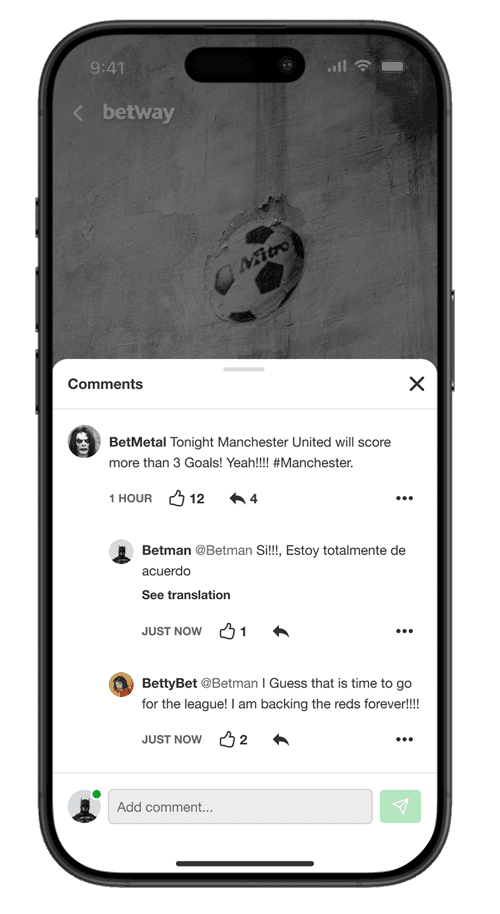
Craft a seamless social layer (Feed, Profile, Clips) for Betway users
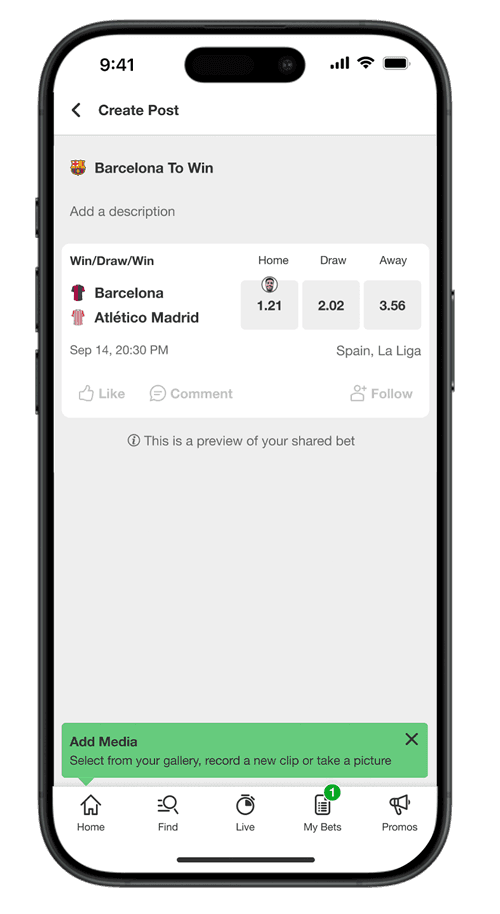
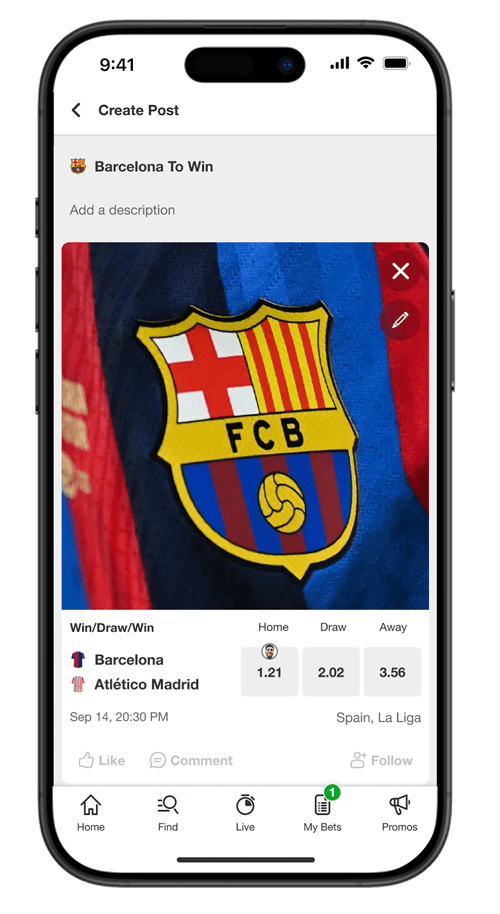
Enable users to create and share posts with predictions
Design within and extend the existing design system
Continuously evolve UX using user testing and data feedback
Key Journeys
Feed
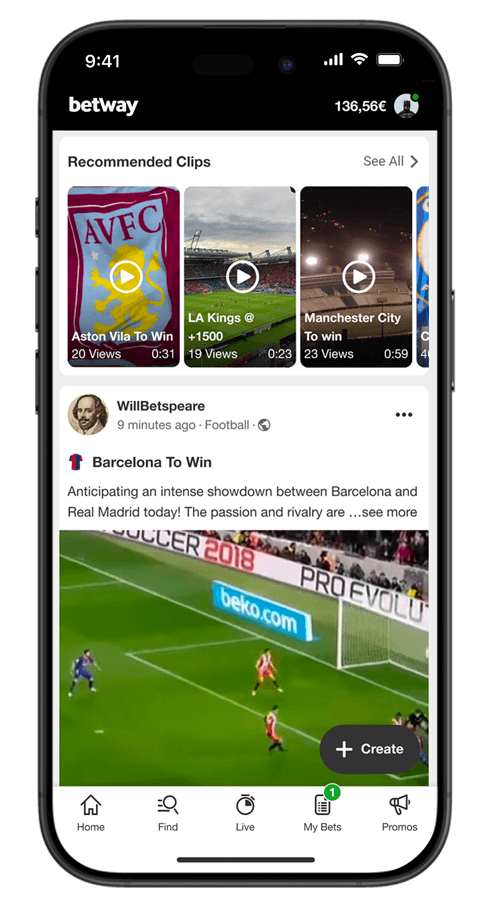
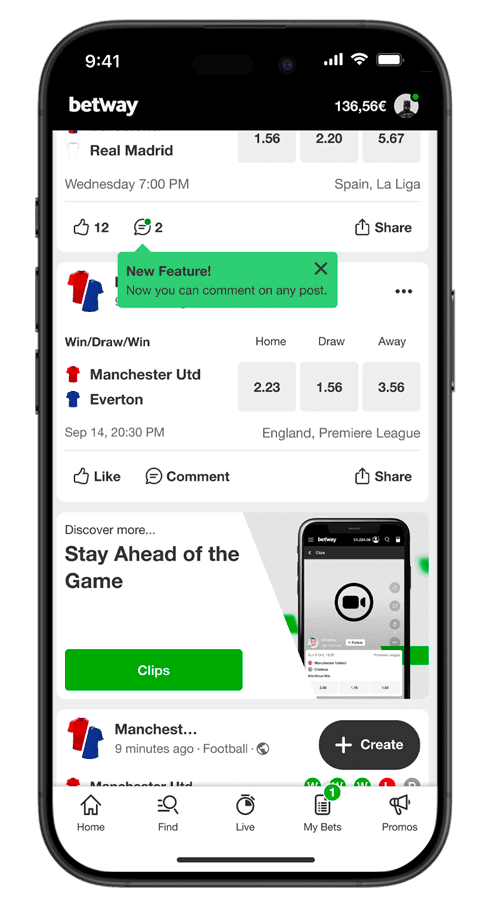
Dynamic content blocks (posts, predictions, interactions)
Reactions and comment triggers
Scroll behavior optimized for mobile
Profile
Modular layout: bio, activity, followed topics
Shareable moments (Clips, Wins)
Post Creation
Multi-step UX: select event → create post → write prediction → publish to the Feed
Preview and edit support
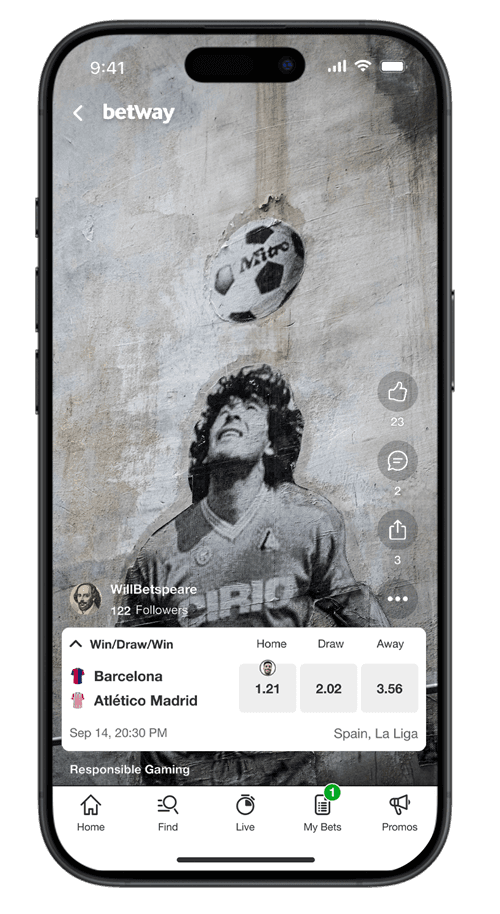
Clips
Short-form video-style content
Consistent interaction buttons: like, comment, share
Research & UX Iteration
Participated in user interviews and usability testing cycles
Collected feedback via, User Testing, Userlytics, Internal surveys & internal analytics
Iterated designs based on friction points (e.g. post clarity, engagement triggers)
Design System & Scalability
Migrated the design system from Adobe XD to Figma alongside the transition to a React-based architecture.
Introduced a token-based system (primitives and semantic layers) to enable scalable multi-brand theming across sportsbook and casino products.
Aligned design tokens with the frontend codebase and Storybook components to ensure consistency between design and implementation.
Design and engineering alignment was critical to ensure the system scaled effectively.
Figma components were structured to map directly to React components, with tokens translated into CSS variables and integrated into the Tailwind-based styling system.
This created a shared foundation between design and development, reducing inconsistencies and enabling faster, more reliable implementation across the product.
Conclusion
This project expanded Betway’s product experience beyond betting by introducing a social layer that increased engagement opportunities while maintaining usability in a high-traffic environment. It also reinforced the importance of scalable systems and close collaboration between design and engineering.